
Poker Series in Europe in 2026: Where the Biggest Events Take Place
Europe’s live tournament calendar in 2026 is unusually strong, with major festivals spread across France, Monaco, Spain, Czechia, Ireland and Malta. The year combines long-established tours with events that have changed venue or grown sharply in size, so the most important dates are not concentrated in a single country. The European Poker Tour returns to Paris, Monte-Carlo, Barcelona and Prague, while WSOP Europe has moved to Prague and the Irish Open has again filled the Royal Dublin Society in Dublin. Later in the year, Battle of Malta and the new WSOP Super Circuit KINGS give players further large-scale options. For anyone comparing the biggest European series, the useful questions are straightforward: where the festival is held, when it runs, how much the Main Event costs, how large the field is likely to be and whether the schedule suits a recreational player as well as a professional.
European Poker Tour 2026: Paris, Monte-Carlo, Barcelona and Prague
The European Poker Tour remains one of the clearest ways to follow top-level live poker across the continent because its 2026 calendar is built around four major stops. EPT Paris ran from 18 February to 1 March at Le Palais des Congrès, with Club Barrière Paris acting as the licensed operator. The €5,300 EPT Main Event drew 1,474 entries and created a €7,075,200 prize pool, which underlines the scale of the return to the French capital. The Paris festival also included the lower-priced PokerStars Open Main Event, giving players a route into the same large festival without committing to the full EPT Main Event buy-in. Paris is therefore important not only because of the prestige of the EPT name, but also because the schedule covered several price levels and attracted a field large enough to make the Main Event one of the substantial European tournaments of the year.
The second EPT stop was Monte-Carlo, held from 30 April to 10 May at Sporting Monte-Carlo. The €5,300 Main Event ran from 4 to 10 May, while the schedule also featured a €3,250 Mystery Bounty and a €25,000 High Roller. Monte-Carlo is a different proposition from Paris or Barcelona because the destination itself is more expensive and the surrounding schedule contains a strong high-stakes element. That does not mean every tournament is aimed at high rollers, but players planning the trip need to budget for accommodation and daily costs as carefully as for entry fees. The setting at Sporting Monte-Carlo also gives this stop a distinctive status within the EPT calendar. It has been part of European tournament history for more than two decades, and in 2026 it again served as the spring meeting point for many established professionals and travelling tournament regulars.
Barcelona then hosted the longest EPT festival of the summer, from 16 to 29 August at Casino Barcelona. The €5,300 EPT Main Event ran from 22 to 29 August, alongside a €100,000 Super High Roller, a €3,250 Mystery Bounty and a €10,300 High Roller. Barcelona is especially useful for players who want a wide selection of tournaments in one trip because the EPT is paired with the PokerStars Open schedule. The 2026 PokerStars Open Main Event carried a €1,650 buy-in, offering a significantly lower entry point than the main EPT event. The final EPT stop is Prague from 2 to 13 December at Hilton Hotel Prague. Its €5,300 Main Event is scheduled for 7–13 December, with the €1,100 PokerStars Open Main Event starting earlier in the festival. As of 5 October 2026, Prague is still ahead, making it the main year-end EPT destination.
How the four EPT destinations differ for players
Paris is the most convenient of the four stops for many Western European players because it is well connected by rail and air, and the festival takes place in a large convention venue rather than a small casino room. The 2026 numbers also show that the event can support a very large field: 1,474 entries in the €5,300 Main Event generated more than €7 million in prize money. For players who prefer a lower buy-in, the PokerStars Open events around the EPT provide another reason to travel. The practical point is that an EPT trip does not necessarily mean entering the most expensive tournament on the schedule. A player can choose a smaller event, use satellites where available or simply attend for a shorter part of the festival. That flexibility matters because a full EPT stop can last well over a week, and the total cost of travel, accommodation and multiple entries may exceed the headline Main Event buy-in.
Monte-Carlo sits at the opposite end of the travel-cost spectrum. The €5,300 Main Event is in line with the core EPT price, but accommodation and everyday expenses in Monaco and the surrounding French Riviera can materially raise the total budget. The venue, Sporting Monte-Carlo, is one of the best-known settings on the European circuit, and the 2026 schedule again places the Main Event beside major high-roller tournaments. Barcelona is generally easier to combine with a longer festival stay. Casino Barcelona is in Port Olímpic, close to a large choice of hotels, restaurants and public transport, while Barcelona-El Prat Airport is roughly 12 kilometres from the city centre. The two-week schedule also gives players more freedom over arrival and departure dates. Someone interested mainly in the €1,650 PokerStars Open Main Event can travel earlier, while an EPT Main Event player can arrive closer to 22 August.
Prague is the key winter stop and has an unusual position in 2026 because the city hosts both WSOP Europe in spring and EPT Prague in December. The EPT festival runs at Hilton Hotel Prague, the same broad part of the city that has long been associated with major December poker events. The €1,100 PokerStars Open Main Event runs from 2 to 7 December, followed by the €5,300 EPT Main Event from 7 to 13 December, so players can move from a lower-priced flagship tournament directly into the main EPT week. Prague is also relatively easy to reach from much of Europe, which has helped make it a dependable year-end destination. For a player choosing between the four EPT stops, the decision is therefore not only about prestige. Paris offers scale and transport links, Monte-Carlo offers a high-end setting, Barcelona offers the broadest summer schedule, and Prague offers a concentrated December finale.
WSOP Europe in Prague and the record-breaking Irish Open in Dublin
WSOP Europe made one of the biggest changes to the 2026 European calendar by moving to Prague. The series ran from 31 March to 12 April at Hilton Prague in partnership with King’s Casino Prague and awarded 15 WSOP gold bracelets. Its centrepiece was the €5,300 Europe Main Event, which carried a €10 million guarantee. The final numbers went beyond that figure: 2,617 entries created a €12,561,600 prize pool, and Marius Kudzmanas won €2 million for first place. Those figures make the event one of the most important live tournaments held in Europe in 2026. The broader schedule was not limited to No-Limit Hold’em. It included Pot-Limit Omaha tournaments, bounty formats, a Ladies Championship, a European Circuit Championship and high-roller events. Even so, the appeal of the series is easy to understand without focusing on technical formats: a WSOP bracelet is one of poker’s most recognised tournament prizes, and Prague offered 15 chances to win one.
The Irish Open took place almost at the same time, from 26 March to 6 April at the Royal Dublin Society. That overlap forced some travelling players to choose between Dublin and Prague or split their trip between the two cities. The Irish Open’s attraction is different from WSOP Europe. Its Main Event cost €1,150, far below the €5,300 WSOP Europe Main Event, yet the Dublin tournament produced an enormous field. A total of 5,003 entries created a €4,852,910 prize pool, setting a new record for the event. Narcis Nedelcu won the Main Event for €336,790 after a deal among the final players. The festival contained 86 tournaments, and the scale was not limited to the headline event: the Mini Irish Open attracted 7,349 entries. Those numbers make Dublin one of the most relevant destinations for players who value a large field but do not want a five-figure overall tournament budget.
The comparison between Prague and Dublin shows why the phrase “biggest poker series” can mean different things. WSOP Europe carries bracelet prestige, a €10 million Main Event guarantee and a €5,300 flagship buy-in. The Irish Open is older than most modern European tours, has a much lower Main Event entry fee and in 2026 attracted more individual entries to its flagship tournament than WSOP Europe. Prize money is therefore only one measure of size. Field numbers, the number of events, the range of buy-ins and the importance of the title all matter. A professional chasing bracelets or Player of the Year points may naturally favour WSOP Europe, while a recreational player may find the Irish Open more practical because of the lower Main Event cost and the volume of mid-priced tournaments. Both were major events, but they served partly different audiences.
What the 2026 results say about the scale of Prague and Dublin
The WSOP Europe Main Event in Prague provides the clearest example of how quickly a major series can grow after a venue change. The event was announced with a €10 million guarantee, already described by WSOP as the largest guaranteed prize pool in European live poker history. The final €12,561,600 prize pool exceeded that guarantee comfortably, and the 2,617-entry field was large for a €5,300 tournament. The first prize of €2 million also put the winner’s payout in a different bracket from most regular European Main Events. This does not mean that every event on the schedule required thousands of euros. The series opened with a €1,100 Mystery Bounty and included a €565 Colossus and a €1,000 Ladies Championship. For visitors, that spread of buy-ins was important because it made it possible to attend a bracelet festival without entering the Main Event or the high rollers.
Dublin’s 5,003-entry Main Event tells a different story. The €1,150 buy-in and €2.5 million guarantee made the event accessible to a much wider group of tournament players, and the final prize pool reached €4,852,910. The Irish Open also drew players from 60 countries, illustrating that the festival is no longer primarily a domestic event. Its appeal rests partly on history: the Irish Open dates back to 1980 and is widely presented as the longest-running No-Limit Hold’em tournament outside Las Vegas. In 2026, however, history alone did not explain the turnout. The schedule combined the Main Event with the €1 million-guaranteed Mini Irish Open, a €1 million-guaranteed Mystery Bounty and dozens of side events at different price levels. That combination created a festival in which players could stay for several days without needing to enter only premium-priced tournaments.
For practical planning, the 2026 overlap is worth remembering. The Irish Open began on 26 March, while WSOP Europe started on 31 March, and both continued into April. Travelling between Dublin and Prague is possible by air, but trying to play both Main Events can turn a tournament trip into a demanding schedule with additional flights, hotel changes and registration deadlines. A better approach for most players is to choose the festival that matches the intended budget and reason for travelling. Dublin offered the larger Main Event field and lower entry price; Prague offered bracelets, a larger flagship prize pool and the stronger high-stakes schedule. Players who simply want the atmosphere of a major festival can also attend without entering the headline tournament. Side events and satellites allow a more controlled budget, although every entry should still be treated as entertainment spending rather than as an expected source of income.
Battle of Malta, WSOP Circuit stops and Europe’s late-season calendar
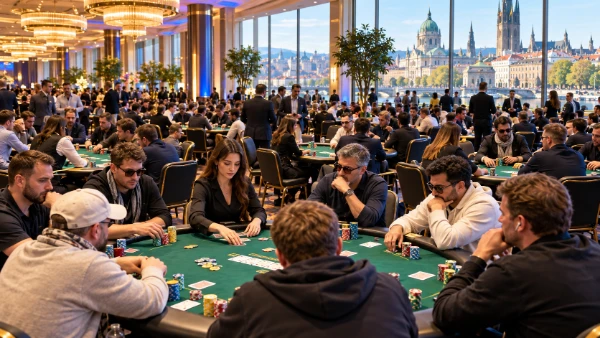
The second half of 2026 remains busy after the summer EPT in Barcelona. Battle of Malta returns in the autumn with Road to BOM warm-up events from 23 to 26 October and the main festival from 27 October to 4 November. The official September schedule lists a €1.5 million guarantee for the Main Event and a €600 Main Event ticket, keeping the flagship tournament well below EPT and WSOP Europe pricing. That combination is central to the event’s appeal: it aims for a large international field without requiring a €5,300 entry. Malta is also a compact destination for a poker trip, with the main gaming and hotel areas around St Julian’s close to one another. For players looking at the calendar as of early October, Battle of Malta is one of the largest confirmed European festivals still to come before the end of the year.
Czechia then becomes a major focus again. WSOP has announced the WSOP Super Circuit KINGS at King’s Resort in Rozvadov from 28 October to 11 November 2026. The new Super Circuit format is promoted with a Main Event carrying at least a $2 million guarantee, placing Rozvadov back among the most significant autumn tournament destinations. The timing overlaps with Battle of Malta, so players considering both need to compare schedules before booking. The broader WSOP Circuit calendar also gives Europe several additional options. Casino Gran Vía in Madrid is scheduled to host a Circuit stop from 23 October to 2 November, while Dusk Till Dawn in Nottingham is listed for 4 to 16 November. These Circuit events are important for frequent tournament travellers, although the Super Circuit in Rozvadov stands out because of its larger guarantee and the long-established poker infrastructure at King’s Resort.
The final major stop of the year is EPT Prague from 2 to 13 December at Hilton Hotel Prague. This makes Prague the only European city in 2026 to host both WSOP Europe and a full EPT festival in the same calendar year. The December schedule begins with the €1,100 PokerStars Open Main Event, followed by the €5,300 EPT Main Event and other events including a €3,200 Mystery Bounty and a €10,300 High Roller. For players who missed Paris, Monte-Carlo or Barcelona, Prague provides one last chance to play an EPT Main Event in 2026. It also gives the European season a clear closing point. By then, many of the year’s largest fields and prize pools will already be known, so Prague will be judged not only as a prestigious annual stop but also against an unusually strong year that has included record numbers in Dublin and a record WSOP Europe Main Event prize pool.
How to choose the right European poker series in 2026
The first comparison should be the full cost of the trip rather than the Main Event buy-in on its own. A €600 event in Malta, a €1,150 Main Event in Dublin and a €5,300 EPT or WSOP Europe Main Event sit in very different budget categories, but travel and accommodation can narrow or widen that gap. Monte-Carlo, for example, can be costly even before tournament entries are added, while Prague often offers a wider range of accommodation. The length of the festival matters as well. A player staying for ten days may spend more away from the tables than someone entering a more expensive tournament during a three-day visit. It is sensible to decide in advance how many events will be played, set a separate travel budget and avoid treating potential winnings as money that will fund the rest of the trip.
The second question is what kind of experience the player actually wants. WSOP Europe is the obvious 2026 choice for bracelet prestige and a very large Main Event prize pool. The EPT offers a consistent international format in four leading destinations and combines €5,300 Main Events with lower-priced PokerStars Open tournaments. The Irish Open is particularly strong for players who prefer huge fields at a lower flagship buy-in, while Battle of Malta offers another mass-participation option later in the year. WSOP Circuit events in Madrid, Rozvadov and Nottingham add flexibility for players who cannot travel during the EPT dates. There is no single series that is automatically best for everyone. A first live-festival trip may be more comfortable at a lower buy-in event, whereas an experienced tournament player may place greater value on a bracelet event or an EPT title.
Finally, players should check the organiser’s current schedule shortly before travelling because starting flights, registration rules, payment methods and satellite programmes can change. Identification requirements also vary by venue, and major organisers generally require valid government-issued ID for entry and registration. For EPT events, a PokerStars Live account is required, while WSOP events use their own registration system and event rules. These details are practical rather than technical, but missing one can disrupt an otherwise well-planned trip. The 2026 calendar offers an unusually broad choice: Paris, Monte-Carlo, Barcelona, Prague, Dublin, Malta, Madrid, Rozvadov and Nottingham all host noteworthy series. The best choice is the one that fits the player’s budget, preferred dates and tournament goals while leaving enough room for travel costs and responsible limits away from the table.