Poker Streams: How Live Broadcasts Are Changing the Playing Style of Professionals
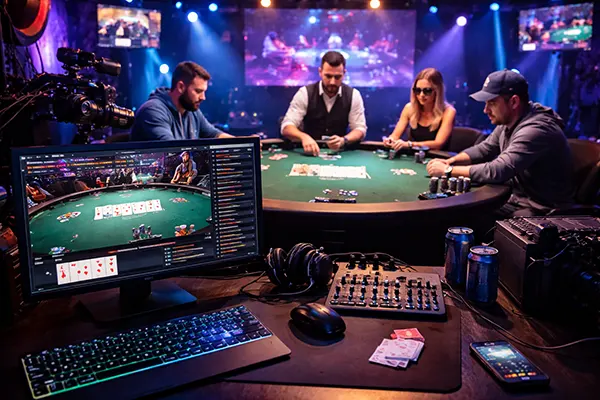
Over the past decade, poker streaming has moved from a niche hobby on Twitch to a fully integrated part of the professional ecosystem. By 2026, live broadcasts are no longer just entertainment — they shape training routines, table image construction and even strategic decision-making at the highest stakes. When elite players know their hands, timing and reactions are being analysed in real time by thousands of viewers, their approach inevitably evolves. Streams influence aggression levels, bluff frequencies, information control and psychological discipline, creating a new layer of meta-game that did not exist in the televised poker boom of the 2000s.
Transparency and Strategic Adaptation in the Streaming Era
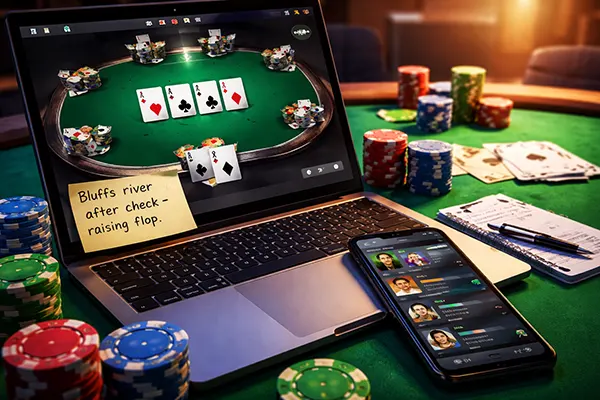
Streaming has dramatically increased transparency in professional poker. Regular viewers now track bet-sizing patterns, pre-flop ranges and post-flop tendencies across hundreds of hours of footage. In 2026, data aggregation tools allow fans and competitors to catalogue streamed hands with surprising precision. As a result, professionals who broadcast frequently must constantly refine their strategies to avoid becoming predictable.
This constant visibility pushes players towards more balanced and solver-informed play. Whereas earlier eras allowed long-term exploitation of weaker pools without much scrutiny, streamed professionals face instant public feedback. If a player over-bluffs certain river textures or under-defends the big blind, that tendency will quickly be clipped, shared and discussed. The response has been a noticeable increase in GTO-aligned structures among high-profile streamers.
At the same time, complete equilibrium play is rarely optimal in soft games. Professionals must therefore manage a dual identity: playing fundamentally sound poker while selectively deviating without revealing clear patterns on stream. This balancing act has become a modern professional skill in its own right.
The Rise of Meta-Game Awareness
Meta-game awareness has intensified as streaming culture matured. Professionals understand that their opponents may have studied dozens of their sessions before sitting at the same table. This leads to deliberate image manipulation. Some streamers intentionally show down light bluffs early in a session to cultivate a loose reputation, planning to capitalise later with value-heavy lines.
Others adopt controlled unpredictability. They vary timing, adjust bet sizings beyond solver baselines and occasionally implement unconventional lines specifically to disrupt database-driven counter-strategies. In 2026, where hand histories and clips circulate rapidly across social media, subtle strategic noise can protect long-term profitability.
Importantly, this meta-layer extends beyond individual sessions. Professionals now think in terms of “broadcast seasons” rather than isolated tournaments. They consider how a sequence of streamed events shapes public perception, sponsorship value and opponent preparation. Poker has become not only a card game, but also a performance under scrutiny.
Psychological Discipline Under Continuous Observation
Playing while being watched alters cognitive load. Professional streamers must manage real-time decision-making, audience interaction and emotional control simultaneously. Unlike private high-stakes environments, streamed tables leave little room for visible tilt. Every reaction — a sigh, a smirk, a moment of frustration — can be replayed and analysed.
As a result, many professionals in 2026 incorporate sports psychology techniques into their preparation. Breath control, structured session breaks and pre-session mental warm-ups are now common practice. Maintaining composure on stream protects not only bankroll but reputation, which has tangible financial implications through backing deals and sponsorship contracts.
The psychological shift also affects risk tolerance. Some players reduce high-variance lines on stream to maintain perceived stability, particularly during prolonged downswings. Others deliberately embrace volatility to enhance entertainment value. In both cases, streaming reshapes how professionals weigh expected value against external considerations.
Entertainment Pressure and Strategic Trade-Offs
The commercial dimension of streaming introduces a subtle tension. Audiences favour action, creativity and bold bluffs. However, optimal tournament or cash-game strategy often rewards patience and disciplined folding. Professionals must decide whether to prioritise technical precision or viewer engagement.
In practice, most experienced streamers separate their schedules. They may reserve peak performance sessions for major events, while dedicating specific days to more interactive, audience-driven play. This segmentation allows them to maintain long-term edge without sacrificing brand growth.
By 2026, sponsorship contracts frequently include performance and engagement metrics. Therefore, stylistic adjustments are sometimes economically rational. A slightly looser, more dynamic style may increase short-term variance but strengthen long-term career sustainability. The most successful professionals manage this equilibrium with remarkable precision.
Technology, Data Culture and Collective Learning
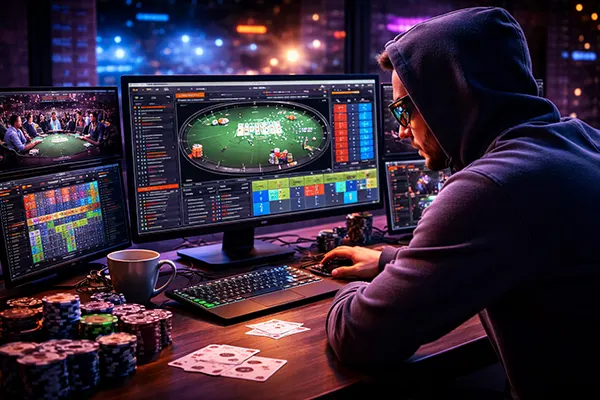
Streaming has accelerated collective learning within the poker community. High-definition broadcasts, integrated HUD displays and post-session analysis segments provide educational depth once reserved for private coaching groups. In 2026, many streams include real-time equity calculations and solver comparisons during breaks, transforming entertainment into structured learning.
This openness has raised the baseline skill level across mid- and high-stakes pools. Recreational players who consistently watch professional streams develop sharper intuition about range construction, stack depth adjustments and ICM pressure. Consequently, professionals face tougher fields and must innovate more frequently to preserve edge.
Moreover, streamed hands often become case studies in coaching content within days. A controversial hero call or a missed value bet can spark hours of analytical debate across forums and training sites. Professionals are therefore incentivised to justify their lines with solid theoretical foundations.
The Future Trajectory of Stream-Influenced Play
Looking ahead, the integration of AI-assisted review tools into streaming workflows is expected to deepen strategic sophistication. Some broadcasters already schedule automated post-session breakdowns that compare their key decisions with solver outputs. This immediate feedback loop shortens the adaptation cycle between mistake recognition and correction.
There is also a growing trend towards delayed broadcasts in high-stakes private games, reducing real-time information leakage. Professionals recognise the risk of opponents exploiting live strategic cues. Delays of 30 to 60 minutes are now standard in sensitive environments, preserving competitive integrity without eliminating transparency.
Ultimately, poker streaming in 2026 has reshaped professional identity. Success depends not only on technical mastery, but also on psychological resilience, brand awareness and strategic adaptability under observation. The modern professional is part competitor, part analyst and part broadcaster — and their playing style reflects that multifaceted role.